At a shooting range in rural Texas, I asked a drone vendor whether border control drones could be used on asylum seekers. 'Anything you want, sweetheart,' he replied.
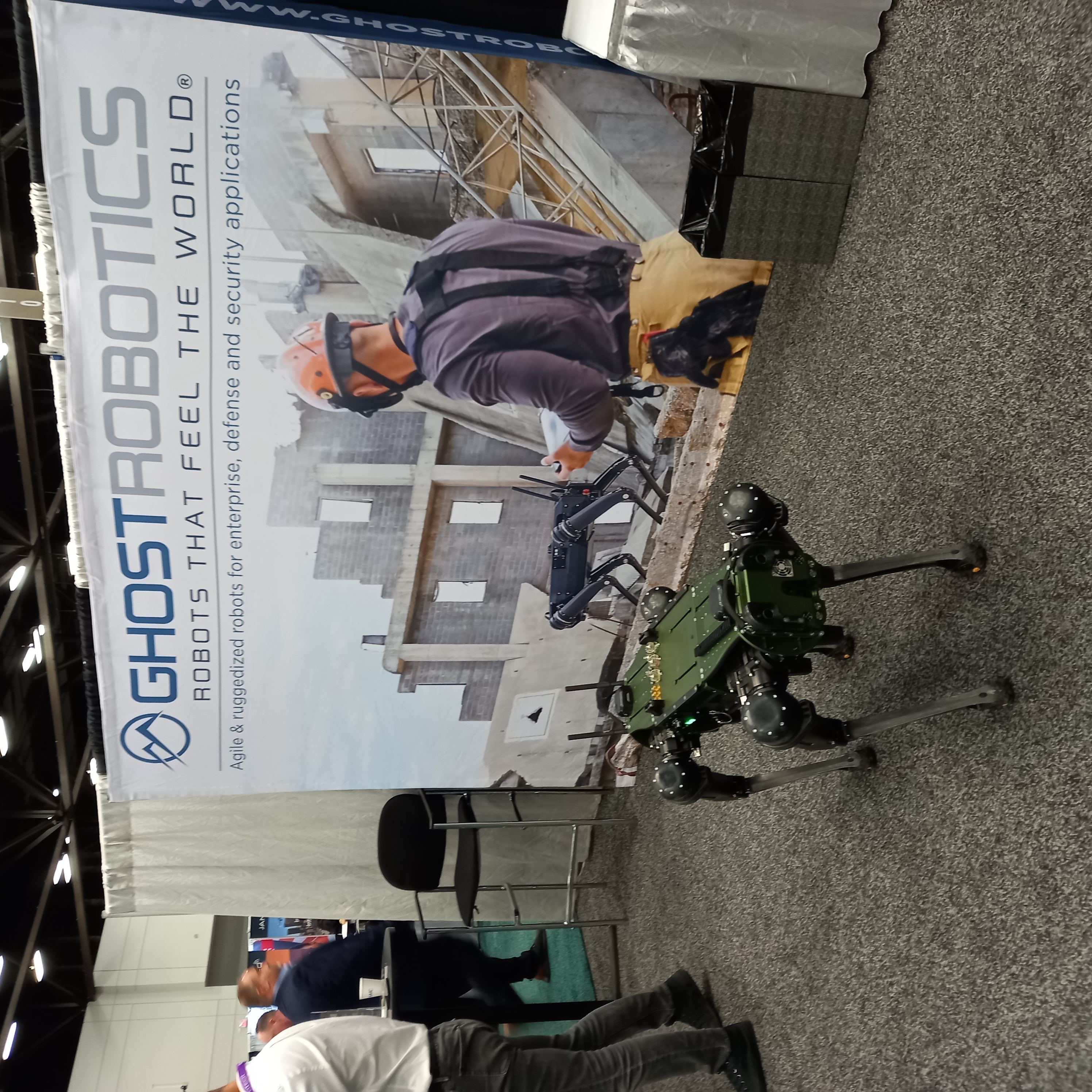
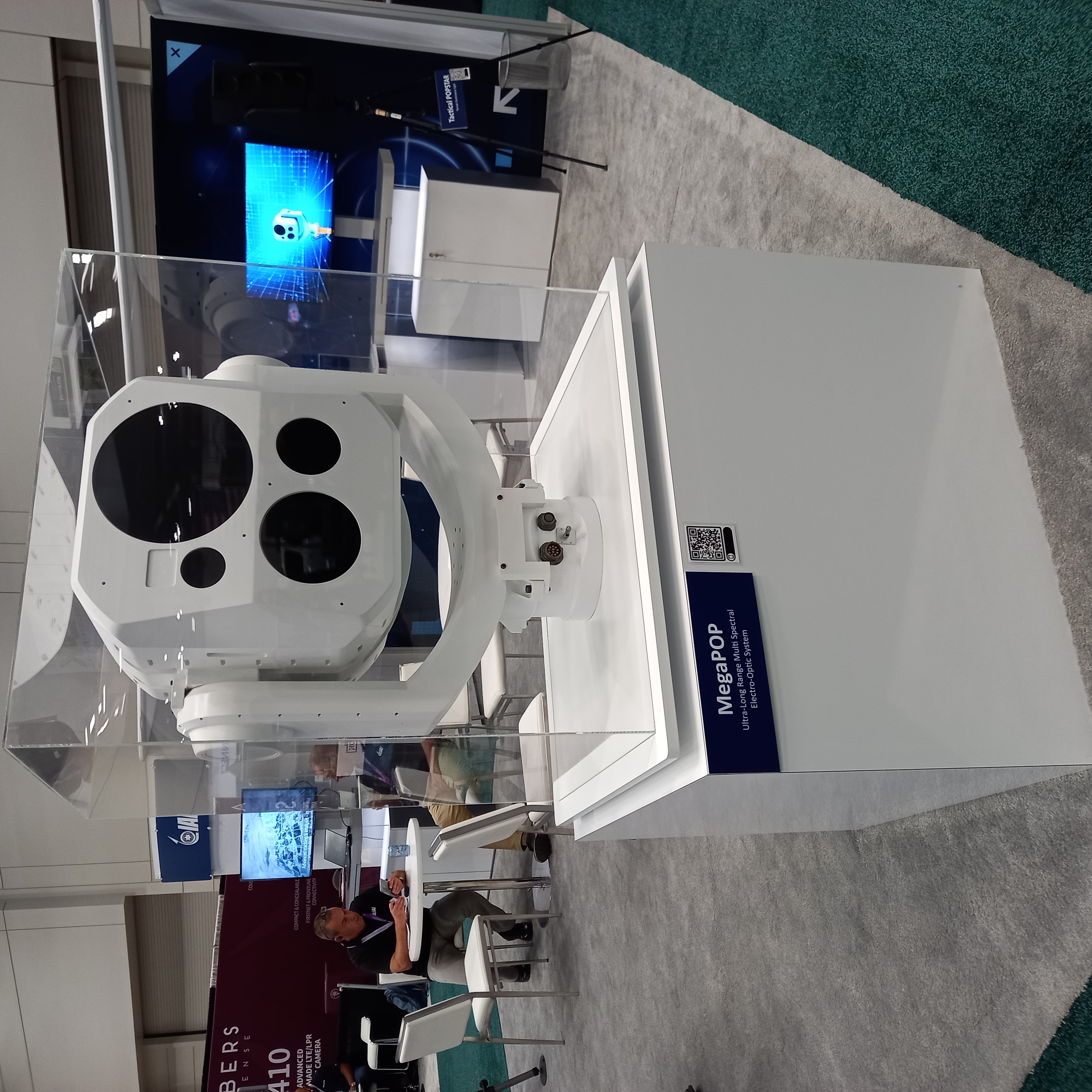
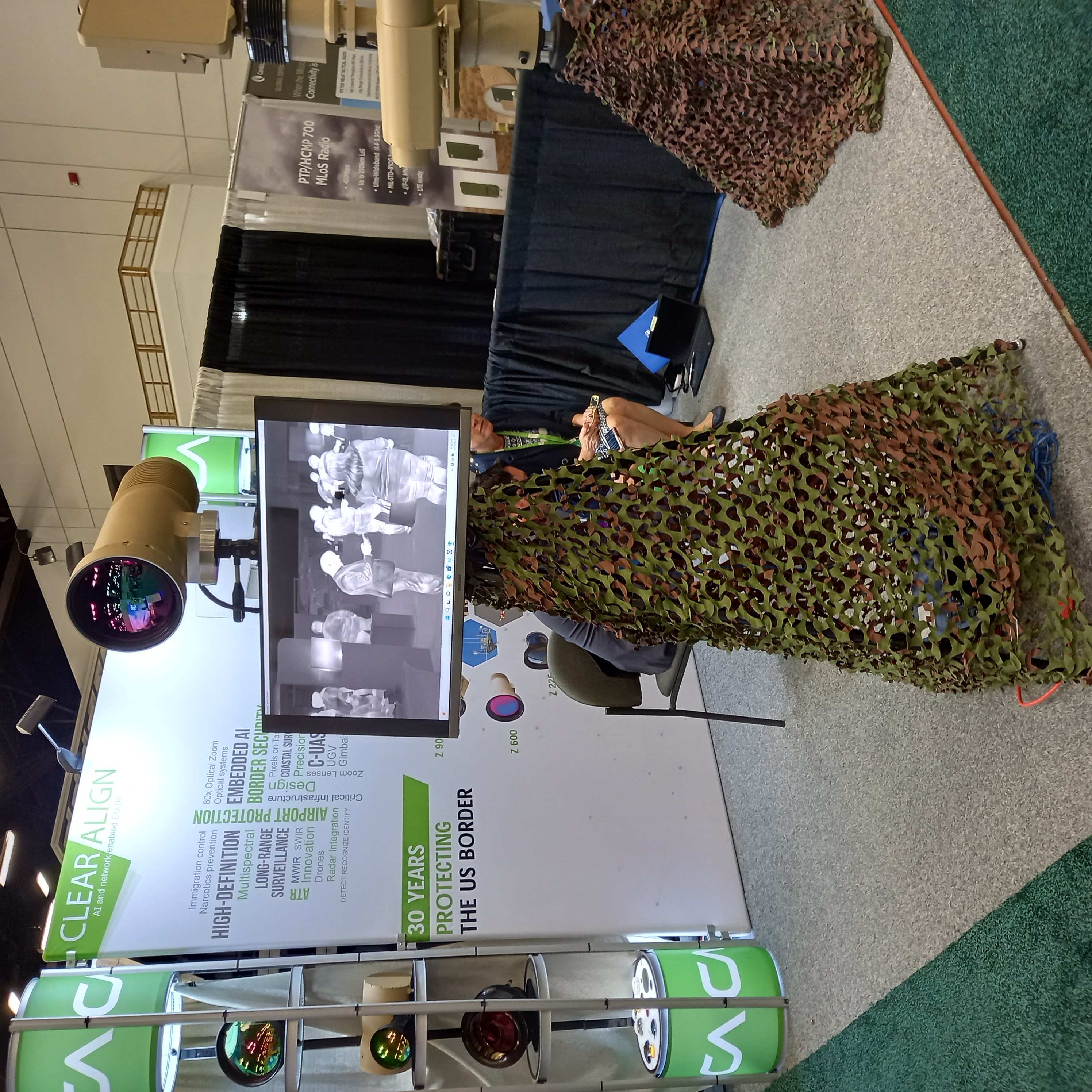
Between 2022 and 2024, I attended 6 border security expos in the US, Europe, and Turkey. The 1st border expo I attended left a lasting impression on me, not only because it had nearly 1,500 people and was their best attended event in 15 years, but it hosted around 200 military and technology vendors. The Border Security Expo was held in March 2022 in San Antonio and the accompanying Sharpshooters Classic and Demo Day was held at the La Copa Ranch in Falfurrias, Texas. Vendors were showcasing everything from algorithmic software to power surveillance cameras, to drones, robot-dogs wagging their tails as their operator explained how they assist with border control, to border patrol helicopters and cars, stun guns and real arms. All the top border control vendors were present, from Elbit Systems to Anduril, Palantir, IBM, Dell, and other medium and smaller companies which may or may not have an obvious connection to border work. For example, Verizon, a United States phone provider, has been helping the United States border patrol to set up phone services in remote locations near the US southern border.
Given the politicisation of immigration and border control, presenters at the expos I attended in Texas (San Antonio in 2022 and El Paso in 2023) and expos in Europe and Turkey (Lisbon 2022, Skopje 2023, London 2023, and Istanbul 2024) had a similar framing of immigration as a security threat and border control as a defence mechanism. Speakers were sharing the most provocative ideas, stating that 'AI powered technologies are only used to execute the non-partisan mission of deporting those who committed crimes'; 'AI ethics is nothing but white noise'; and 'border walls are simply tools to stop cartel and not migration'. What I found particularly striking was that United States government officials present often emphasised the humanitarian aspect of their work, specifically how they helped migrants get water and bring them to safety while they were crossing the treacherous US southern border.
According to some of the attendees, what made technologies either ethical or not was based on how governments deployed them. This framing echoed the same sentiment of representatives from the technology industry that I interviewed. They emphasised that technologies themselves are neutral, and therefore accountability lies with the institutions that implement them. Yet, military-grade drones or data-processing software that is designed to be integrated with surveillance towers, have specific functions. They function to increase detection capabilities, enable interception, and identify problems along borders.
At the 2022 and the 2023 Texas expos, I met Palmer Luckey, the founder of Anduril Industries, a company that specialises in developing and manufacturing advanced autonomous systems. He delivered keynote speeches promoting autonomous weapons systems and framed them as the future of border security and national defence. Anduril sells their products to the military and national security agencies of the United States and other countries. They have secured over USD 600 million in Department of Homeland Security contracts since 2020 for their algorithmic sensor towers. At the expo, I observed these towers up close and learned how they combine radar, optical sensors, and machine learning to monitor remote border areas that are costly to patrol on foot. During the 2022 expo, I briefly spoke with Luckey before vendors and other attendees intervened with effusive praise for Anduril's achievements. In 2024, Anduril partnered with Palantir Technologies and combined Anduril's hardware with Palantir's data analytics expertise to offer what they described as a more efficient way of supplying cutting-edge defence capabilities to the United States government.
Many companies that are developing border security and immigration management technologies operate across national borders. These technologies are developed, marketed, and sold transnationally, then adapted for specific jurisdictions. The expos were the place to be to access this transnational market that also shapes what US, UK, Canada, and other middle-powers and Five Eyes Alliance members deploy. The European expos were smaller but had a more diverse set of attendees from the continent of Africa and from Eastern Europe and the presentations also focused on a wider variety of countries and challenges than the US expos.
After the 2022 Expo, a small number of technology companies were demonstrating their products in action at Sharpshooters Classic and Demo Day in La Copa Ranch in Falfurrias, Texas. There, with a group of CBP officers who stood behind me impassively, I shot a semi-automatic, intercepted a drone with a drone jammer, and enjoyed some Texas BBQ.
The same word kept coming up all week: tools. AI systems were tools. Surveillance towers were tools. Guns, apparently, are just tools too. Holding one and being surrounded by drones and robot dogs, I found that argument harder to make when every border crosser – asylum seeker, tourist, business traveller – becomes a data point.
Someone took a video of me awkwardly shooting a semi-automatic. Should I ever run for office, I hope it never surfaces. A CBP officer had to reposition my hands twice. Wordlessly. With the energy of someone who had given up explaining.